Analysis of ACB Applications in Emergency Power Systems
This article includes content generated with the assistance of AI, based on technical references and practical application knowledge in the electrical industry.
Introduction
In a world driven by automation and 24/7 operations, emergency power systems have become critical for safety and continuity. From hospitals to data centers, a reliable backup power supply ensures operations don’t come to a halt during grid failures.
At the center of these systems lies an important yet often overlooked component: the Air Circuit Breaker (ACB).
This article explores the role of ACBs in emergency power systems, based on established engineering standards and field-proven applications, aiming to help decision-makers choose the right protection strategy.
1. What Is an Emergency Power System?

Emergency power systems serve as a secondary source of electricity when the primary utility supply fails. They usually consist of:
-
Standby generators or UPS units
-
Automatic Transfer Switches (ATS)
-
Distribution and protection devices such as ACBs
These systems are essential in:
-
Hospitals (e.g., ICU, surgery rooms)
-
Industrial processes (e.g., chemical safety, refrigeration)
-
Transportation hubs (e.g., lighting, traffic control)
-
Communication facilities (e.g., servers, telecom base stations)
2. What Is an Air Circuit Breaker (ACB)?
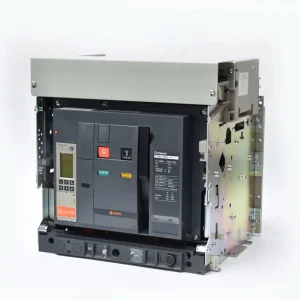
An Air Circuit Breaker is a low-voltage protection device designed to interrupt fault currents and isolate equipment during abnormal electrical conditions. It uses air as the arc extinguishing medium and is commonly rated up to 690V, 6300A.
ACBs typically feature:
-
Adjustable LSIG protection (Long-time, Short-time, Instantaneous, Ground-fault)
-
Manual and motorized switching options
-
Remote monitoring and control interfaces (e.g., Modbus, Ethernet)
3. Why ACBs Are Ideal for Emergency Power Systems
✅ Reliable Fault Protection
In emergency systems, it’s essential to prevent the generator or backup source from damage due to short-circuits or overloads. ACBs offer precise trip characteristics and can isolate faults without affecting other circuits.
Example: In a hospital’s generator-backed ICU unit, an ACB can quickly isolate a faulty panel while keeping the rest of the facility operational.
🔄 Safe and Seamless Source Switching
ACBs often function as incoming or tie breakers in Automatic Transfer Switch (ATS) systems. When the utility fails, the ACB facilitates safe disconnection and reconnection between utility and generator without electrical arcing or delay.
⚡ High Short-Circuit Withstand and Breaking Capacity
Emergency systems must handle transient surges, especially during generator startup or load transfer. ACBs are designed to handle high Icu/Ics ratings, preventing hazards during such high-energy transitions.
📊 Intelligent Monitoring and Predictive Maintenance
Modern ACBs support smart grid integration through digital modules, providing:
-
Real-time monitoring of load current and temperature
-
Fault event logs
-
Predictive alerts for wear and tear
This ensures fewer unplanned outages and longer equipment lifespan—crucial for critical environments like data centers.
4. Real-World Use Cases
| Industry | Use of ACBs in Emergency Systems |
|---|---|
| 🏥 Hospitals | Switching between grid and diesel generator, protection of life-support equipment |
| 🏭 Factories | Protection of high-load backup equipment and motor control centers |
| 💻 Data Centers | Precision switching and protection for servers and cooling units |
| ✈️ Airports | Power continuity for lighting, control towers, baggage systems |
5. ACB vs MCCB: Which to Use in Emergency Power?
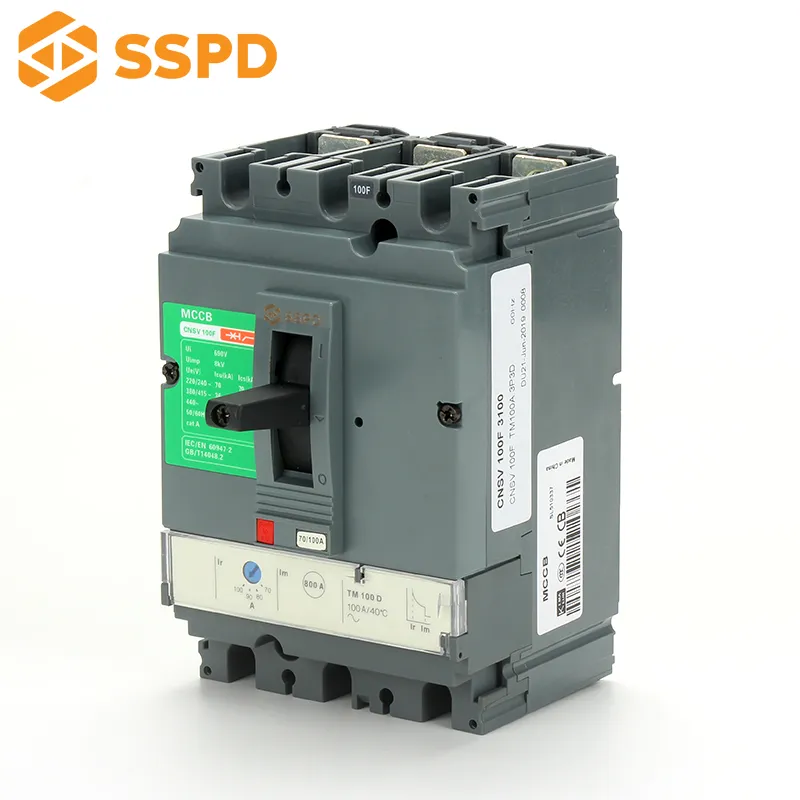
While MCCBs (Molded Case Circuit Breakers) are compact and cost-effective, ACBs are more suitable for main power distribution and critical systems:
| Feature | ACB | MCCB |
|---|---|---|
| Rated Current | Up to 6300A | Up to 1600A |
| Breaking Capacity | High (Icu/Ics) | Medium |
| Protection Setting | Fully adjustable LSIG | Partial (L/S/I) |
| Operation | Motorized or manual | Mostly manual |
| Smart Functions | Advanced (with comms) | Optional basic monitoring |
6. Future-Proofing Emergency Power: The Role of Smart ACBs
With the integration of IoT, green energy, and hybrid systems, ACBs are evolving:
-
🧠 Embedded controllers for predictive diagnostics
-
☀️ Compatibility with solar + diesel backup configurations
-
🌐 Cloud-based control and maintenance alerts
These functions enhance resilience and energy efficiency, helping companies meet ESG and sustainability targets.
7. Conclusion: ACBs Are the Backbone of Emergency Power Reliability
Air Circuit Breakers are no longer just safety devices—they are smart control hubs for modern emergency power systems. They provide a blend of protection, flexibility, and intelligence, enabling faster recovery, minimal risk, and better planning.
Looking to upgrade or design your emergency power distribution system?
Contact SSPD today to learn more about our certified ACB solutions—trusted by engineers worldwide for stability and performance.
Transparency Note
Some portions of this article were generated with the assistance of artificial intelligence based on industry knowledge, product data, and expert-level training sets. All content has been reviewed and verified by human editors to ensure accuracy and alignment with best practices.