By Jimmy Zheng
International Business Manager at SSPD
Reviewed by SSPD Engineering Team
Quick Answer: How Does an MCCB Trip Unit Work?
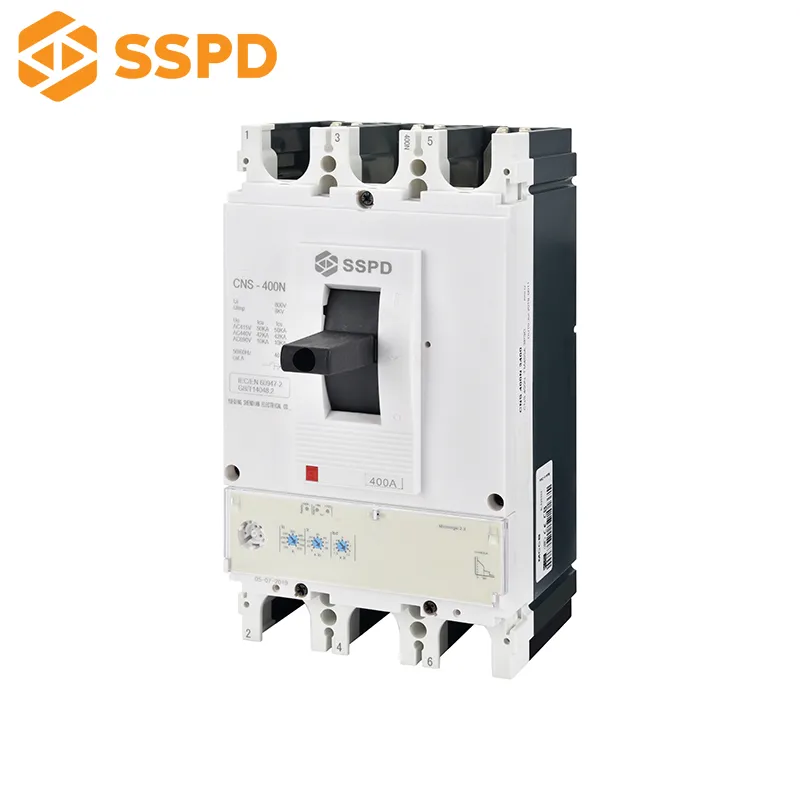
An MCCB trip unit is the protection control mechanism inside a molded case circuit breaker that detects abnormal current conditions and activates the breaker opening mechanism. Depending on the design, MCCB trip units use thermal-magnetic or electronic protection technology to identify overloads, short circuits, and ground faults, ensuring reliable electrical system protection.
Why Is the MCCB Trip Unit Important?
In industrial electrical systems, circuit protection is not only about interrupting current during a fault. The breaker must identify abnormal conditions accurately and disconnect the circuit at the right moment.
A poorly selected MCCB trip unit may cause unnecessary tripping, insufficient fault protection, or poor coordination with other protective devices. This can lead to production downtime, equipment damage, and increased maintenance costs.
Understanding how an MCCB trip unit works helps engineers, switchgear manufacturers, and electrical buyers select the correct protection solution for different applications.
What Is an MCCB Trip Unit?
An MCCB trip unit is the protection component inside a Molded Case Circuit Breaker (MCCB) that monitors current conditions and determines when the breaker should disconnect the electrical circuit.
A simple way to understand the relationship:
- The MCCB contacts carry and interrupt electrical current.
- The trip unit detects abnormal conditions and decides when the contacts should open.
The trip unit acts as the “brain” of the MCCB protection system.
Its main functions include:
- Measuring current conditions
- Detecting electrical faults
- Applying protection settings
- Sending a trip command
- Activating the mechanical opening mechanism
Without a properly designed trip unit, an MCCB cannot provide accurate overload and short circuit protection.
How Does an MCCB Trip Unit Work?
The working process of an MCCB trip unit can be divided into several stages.
1. Current Detection
During normal operation, electrical current flows through the MCCB.
The trip unit continuously monitors the current passing through the breaker.
Depending on the MCCB design, current detection can be achieved through:
- Thermal sensing elements
- Magnetic sensing components
- Current transformers
- Electronic sensors
The purpose is to identify whether the current remains within safe operating limits.
2. Fault Analysis and Protection Decision
When abnormal current occurs, the trip unit evaluates:
- Current magnitude
- Fault duration
- Protection settings
- Application requirements
Not every overcurrent condition requires immediate disconnection.
For example:
A motor may create temporary starting current during startup. However, a continuous overload condition requires protection to prevent overheating.
The trip unit determines whether the condition requires:
- Delayed tripping
- Instantaneous tripping
- No action
3. Trip Signal and Circuit Interruption
When the trip unit confirms a fault condition, it activates the operating mechanism.
The process:
Fault Detection

↓

Trip Unit Decision

↓

Mechanical Release

↓

Main Contact Opening

↓

Arc Extinction

↓

Circuit Interruption
After the contacts separate, the arc chamber extinguishes the electrical arc and safely interrupts the current.
[Image 1]
Suggested image:
MCCB working principle diagram showing:
Current Detection → Trip Unit → Mechanical Release → Contact Opening → Arc Extinction
ALT Text:
MCCB trip unit working principle and circuit protection process
Types of MCCB Trip Units
MCCBs mainly use two types of trip protection systems:
- Thermal Magnetic Trip Unit
- Electronic Trip Unit
The correct selection depends on the application requirements, protection accuracy, and system complexity.
Thermal Magnetic MCCB Trip Unit
A thermal magnetic trip unit combines two protection methods:
- Thermal protection for overload
- Magnetic protection for short circuit
Thermal Protection Function
Thermal protection is designed to detect overload conditions.
When excessive current flows through the circuit for a certain period, heat increases inside the thermal element.
The process:
Overload Current

↓

Heat Generation

↓

Bimetal Element Bends

↓

Trip Mechanism Activated
The time-delay characteristic allows temporary current increases without unnecessary tripping.
Typical applications:
- Distribution boards
- Commercial buildings
- General industrial equipment
Magnetic Protection Function
Magnetic protection responds to high fault currents, especially short circuits.
The process:
Short Circuit Current

↓

Strong Magnetic Force

↓

Instant Trip Action

↓

Circuit Opens
Because short circuit currents can rise extremely quickly, magnetic protection provides rapid interruption to protect electrical equipment.
Advantages of Thermal Magnetic Trip Units
Thermal magnetic MCCBs provide:
- Simple structure
- Reliable operation
- Cost-effective protection
- No external power supply requirement
They are commonly selected for applications where advanced protection adjustment is not necessary.
Electronic MCCB Trip Unit
Electronic trip units provide more advanced protection functions by using electronic measurement and processing technology.
Instead of relying only on thermal and magnetic characteristics, electronic trip units use:
- Current sensors
- Electronic circuits
- Microprocessor-based protection logic
The system continuously analyzes electrical conditions and applies programmed protection settings.
Electronic Trip Unit Protection Functions
A major advantage of electronic MCCB trip units is adjustable protection.
Common functions include:
Long Time Protection (L)
Long-time protection is used for overload protection.
It protects:
- Cables
- Motors
- Electrical equipment
Typical settings include:
- Long-time pickup (Ir)
- Long-time delay (tr)
Short Time Protection (S)
Short-time protection provides delayed short circuit protection.
It allows coordination between upstream and downstream breakers.
Typical settings:
- Short-time pickup (Isd)
- Short-time delay (tsd)
Instantaneous Protection (I)
Instantaneous protection responds to severe short circuit conditions.
It provides rapid interruption when fault current reaches a high level.
Typical setting:
- Instantaneous pickup (Ii)
Ground Fault Protection (G)
Ground fault protection detects abnormal current flowing to ground.
Typical settings:
- Ground fault pickup (Ig)
- Ground fault delay (tg)
Together, these functions create:
LSI Protection
- Long Time
- Short Time
- Instantaneous
LSIG Protection
- Long Time
- Short Time
- Instantaneous
- Ground Fault
[Image 2]
Suggested image:
LSI / LSIG protection function diagram.
ALT Text:
MCCB electronic trip unit LSI and LSIG protection functions
Thermal Magnetic vs Electronic MCCB Trip Unit
| Feature | Thermal Magnetic Trip Unit | Electronic Trip Unit |
|---|---|---|
| Protection | Overload and short circuit | Advanced protection functions |
| Adjustment | Limited | Adjustable settings |
| Accuracy | Standard | Higher accuracy |
| Coordination | Basic | Advanced coordination |
| Cost | Lower | Higher |
| Application | General distribution | Industrial power systems |
How to Select the Right MCCB Trip Unit?
Choosing the correct MCCB trip unit depends on the electrical system requirements.
Choose Thermal Magnetic Trip Unit When:
Suitable for:
- Simple distribution systems
- Small industrial applications
- Cost-sensitive projects
- Basic overload and short circuit protection
Choose Electronic Trip Unit When:
Suitable for:
- Large industrial facilities
- Main distribution panels
- High-current applications
- Systems requiring selective coordination
- Applications requiring adjustable protection
A common mistake is assuming electronic trip units are always better.
The correct choice depends on:
- System size
- Protection requirements
- Coordination needs
- Project budget
Common MCCB Trip Unit Selection Mistakes
Mistake 1: Selecting MCCB Only by Rated Current
Many buyers focus only on ampere rating.
However, proper selection also requires:
- Breaking capacity
- Protection characteristics
- Trip unit type
- Application conditions
Mistake 2: Ignoring Protection Coordination
In complex electrical systems, multiple breakers work together.
Incorrect trip settings may cause unnecessary shutdown of larger areas.
Mistake 3: Choosing Electronic Protection Without Proper Settings
Electronic MCCBs provide flexibility, but incorrect settings can reduce protection performance.
Engineers should understand:
- Ir setting
- Isd setting
- Ii setting
- Coordination requirements
Engineering Example: Selecting an MCCB Trip Unit for Factory Distribution
Application Background
A manufacturing plant requires MCCB protection for its main low voltage distribution system.
System conditions:
- Three-phase industrial power system
- Multiple downstream feeders
- Continuous production operation
- Need for reliable protection coordination
Solution Consideration
A thermal magnetic MCCB may provide basic overload and short circuit protection.
However, for a main distribution application, an electronic trip MCCB may provide additional advantages:
- Adjustable protection parameters
- Better coordination with downstream breakers
- More accurate fault response
The final selection should consider:
- Load characteristics
- Short circuit level
- Protection coordination requirements
- Future expansion plans
How SSPD Supports MCCB Protection Solutions
SSPD provides low voltage circuit protection solutions including MCCB products with different protection configurations.
Our MCCB solutions include:
- Thermal magnetic protection options
- Electronic trip protection options
- Multiple current ratings
- Industrial distribution applications
With manufacturing experience and international customer service capability, SSPD supports distributors, switchgear manufacturers, and industrial buyers in selecting suitable circuit protection solutions.
Frequently Asked Questions
What is the function of an MCCB trip unit?
An MCCB trip unit detects abnormal electrical conditions and activates the breaker mechanism to interrupt the circuit during overload, short circuit, or ground fault conditions.
How does an MCCB trip unit detect faults?
Depending on the design, MCCB trip units use thermal elements, magnetic components, or electronic sensors to monitor current and identify abnormal conditions.
What is the difference between thermal magnetic and electronic MCCB?
Thermal magnetic MCCBs use thermal and magnetic protection methods, while electronic MCCBs use sensors and electronic logic to provide adjustable and more precise protection.
What does LSI mean in MCCB?
LSI represents:
- Long Time protection
- Short Time protection
- Instantaneous protection
It is commonly used in electronic MCCB protection systems.
What does LSIG mean in MCCB?
LSIG adds Ground Fault protection to LSI protection functions.
It provides:
- Long Time
- Short Time
- Instantaneous
- Ground Fault protection
Do all MCCBs have electronic trip units?
No. Many MCCBs use thermal magnetic trip units, while higher-performance MCCBs use electronic trip units for advanced protection requirements.
Which MCCB trip unit should I choose for industrial applications?
For simple distribution systems, thermal magnetic protection may be sufficient. For large industrial systems requiring coordination and adjustable protection, electronic trip units are usually more suitable.
About the Author
Jimmy Zheng
International Business Manager at SSPD
Jimmy Zheng has more than 10 years of experience in low voltage electrical products and international B2B business.
He works with global distributors, switchgear manufacturers, and industrial customers to provide circuit protection solutions including MCCB, ACB, MCB, and contactor products.
His articles share practical knowledge from electrical product selection, international sourcing, and manufacturing experience.
Technical Review
Reviewed by SSPD Engineering Team
The technical team reviews articles for product specifications, protection principles, and compliance with applicable low voltage electrical standards.
Recommended Internal Links
| Anchor Text | Target |
|---|---|
| selecting the right MCCB | How to Select the Right MCCB for Industrial Applications |
| MCCB breaking capacity | How to Choose MCCB Breaking Capacity |
| MCCB Icu and Ics | Icu vs Ics in MCCB |
| MCCB products | SSPD MCCB page |