Why an AC Contactor Won’t Open — And How to Fix It Safely
(A Practical Troubleshooting Guide for Industrial Panels)
In industrial motor control and power distribution systems, an AC contactor that won’t open is more than an inconvenience—it’s a real safety risk. When a contactor stays closed after the control signal is removed, it can lead to overheating, motor damage, or even fire hazards.
Below is a practical, engineer-oriented troubleshooting guide, combining field experience with design logic used by SSPD in its industrial AC contactors.
1. Confirm the Control Signal Is Truly Off
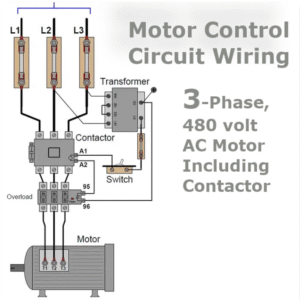
Before assuming a mechanical failure, always start with the control circuit.
Check these points first:
-
Is the control voltage (AC or DC) fully removed from the coil terminals?
-
Is there any feedback voltage caused by shared neutral, PLC output leakage, or indicator lamps?
-
Are auxiliary contacts wired correctly, without unintended self-holding loops?
👉 In many cases, the contactor appears “stuck” but is actually still energized.
SSPD design note:
SSPD contactors use clearly labeled coil terminals and auxiliary blocks, making wiring verification faster and reducing mis-loop risks during panel assembly.
2. Inspect for Welded or Burnt Main Contacts
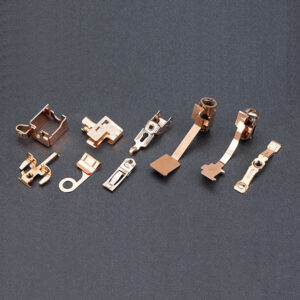
If the coil is de-energized but the contactor remains closed, welded contacts are a prime suspect.
Common causes:
-
Short-circuit current beyond the contactor’s breaking capacity
-
Frequent starts under heavy load
-
Poor coordination with upstream MCCB or fuse
What to do:
-
Isolate power completely
-
Manually check contact movement
-
If contacts are welded → replacement is mandatory (never grind or force open)
SSPD advantage:
SSPD AC contactors are built with high-purity silver alloy contacts and optimized arc chambers to reduce welding risk under frequent switching conditions.
3. Check for Mechanical Jamming or Contamination
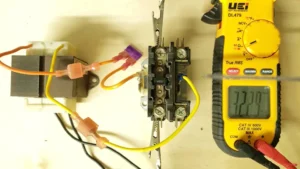
Dust, metal particles, oil mist, or deformation can block the moving core.
Inspection checklist:
-
Moving armature travels freely?
-
Return spring intact and elastic?
-
No visible debris inside the contact chamber?
If mechanical parts are damaged or fatigued, replacing the unit is safer than repair.
4. Verify Coil Health (Even If It Looks “Off”)
A partially damaged coil can behave unpredictably.
Test for:
-
Abnormal coil resistance (too low = shorted turns)
-
Overheating marks or insulation discoloration
-
Buzzing or weak release behavior
A compromised coil may not release the armature cleanly, even when voltage is removed.
SSPD design note:
SSPD coils are vacuum-impregnated and tested for thermal stability and consistent pull-in / drop-out performance, helping ensure reliable opening after long service life.
5. Review Application Matching (This Prevents Repeat Failures)
A contactor that won’t open is often a symptom of incorrect selection, not just a fault.
Ask yourself:
-
Is the contactor rated for the motor type (AC-3 / AC-4)?
-
Is the switching frequency too high?
-
Are ambient temperature and enclosure ventilation adequate?
SSPD recommendation:
When selecting contactors, SSPD emphasizes application-based matching, not just current rating—especially for motors, compressors, and frequent start systems.
When Should You Replace Instead of Repair?
You should replace the contactor immediately if:
-
Main contacts are welded
-
Coil insulation is damaged
-
Mechanical parts are deformed or fatigued
Field repair may restore movement temporarily, but it cannot restore safety margins.
Final Thought: Reliability Starts with the Right Contactor
An AC contactor that won’t open is a clear warning sign. Fast diagnosis, correct replacement, and proper product selection are the real fixes—not temporary adjustments.
As an industrial manufacturer, SSPD designs AC contactors with a focus on stable release performance, contact durability, and clear wiring logic, helping panel builders and distributors reduce downtime and long-term risk.
If you’re facing repeated contactor failures, it may be time to re-evaluate the application—not just the component.