AC contactors are indispensable components in industrial and commercial electrical control systems. They allow remote switching of high-power loads such as motors, lighting systems, heating elements, and capacitors. Choosing the right AC contactor is critical—not just for functionality, but for ensuring system reliability, safety, and longevity.
This guide provides a professional and structured approach to selecting the right AC contactor based on load type, current requirements, duty cycle, and environmental conditions.
What Is an AC Contactor?
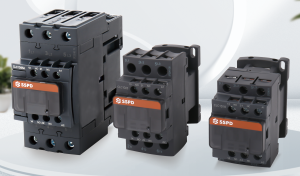
An AC contactor is an electromechanical switching device used to control high-current electrical loads. It typically consists of a coil, a set of contacts, and an arc suppression system. Contactors are preferred over conventional switches because they can handle frequent switching cycles and are compatible with automated control systems.
How to Match an AC Contactor to Your Load?
Choosing the right AC contactor requires accurately matching its rated current, voltage, and utilization category (e.g., AC-3 or AC-4) with the load characteristics, including type (resistive, inductive), start-up behavior, and control circuit voltage.
A mismatch in selection can lead to overheating, welded contacts, reduced lifespan, or even catastrophic failure in the control system.
Step 1: Identify the Load Type
The nature of the load determines the contactor category and sizing approach. Common load types include:
-
🔥 Resistive Loads (e.g., heaters): Constant current with no inrush.
-
⚙️ Inductive Loads (e.g., motors): High inrush currents at startup.
-
💡 Capacitive Loads (e.g., capacitor banks): May require pre-charge circuits.
Step 2: Determine the Rated Current and Voltage
-
For motors, use power (kW/HP) and voltage to calculate full load current.
-
Add a margin (10–25%) to account for inrush or ambient variations.
-
Use IEC reference tables or motor current formulas.
🔧 Example: A 7.5kW motor at 400V draws ~15A. Select a contactor rated for at least 20A AC-3.
Step 3: Choose the Correct Utilization Category
IEC 60947-4-1 defines several categories:
| Category | Description | Applications |
|---|---|---|
| AC-1 | 🔥 Non-inductive or slightly inductive | Heating, resistive lighting |
| AC-3 | ⚙️ Motor starting and running | Compressors, pumps, conveyors |
| AC-4 | 🔄 Plugging/inching of motors | Elevators, cranes, positioning units |
Step 4: Select the Right Coil Voltage
Typical control voltages include:
-
24V DC / AC
-
110V / 220V AC
-
380V AC
Ensure your control panel matches the contactor coil voltage to prevent failure or overheating. ✅
Step 5: Consider Electrical and Mechanical Endurance
Contactors have:
-
Mechanical Life: Total switching operations (e.g., 10 million cycles)
-
Electrical Life: Load-carrying switching cycles (e.g., 100,000+)
Use high-endurance models for frequent switching environments such as CNC machines or conveyors.
Step 6: Evaluate Environmental and Mounting Conditions
Consider:
-
🔥 Ambient temperature (apply derating above 40°C)
-
💦 Dust & moisture (use IP54/IP65 sealed units)
-
📐 Mounting method (DIN rail or panel mount)
-
🏔️ Altitude (derate for elevations above 2000m)
Step 7: Coordination with Overload Relays
Always match contactors with suitable thermal overload relays, particularly for motor circuits.
-
🟡 Type 1: May allow minor damage after short circuit
-
🟢 Type 2: Ensures no damage, ready for restart
Consult coordination charts for proper pairing.
Step 8: Reference Application-Based Selection
| Application | Load Type | Voltage | Duty Category | Suggested Rating |
|---|---|---|---|---|
| Heater Bank | 🔥 Resistive | 230V | AC-1 | FLC × 1.1 (e.g., 16A) |
| 7.5kW Pump Motor | ⚙️ Inductive | 400V | AC-3 | ≥20A |
| Capacitor Bank | 💡 Capacitive | 400V | AC-6b / AC-8b | Surge-rated contactor |
| Elevator Control System | 🔄 Inductive | 400V | AC-4 | High endurance required |
Step 9: Select Trusted Brands and Suppliers
Use contactors that meet international standards (IEC, UL) and offer:
-
🔬 High arc suppression
-
🧪 Certified contact materials (e.g., AgSnO₂)
-
🛠️ Reliable OEM/ODM customization
-
🌍 International market adaptation
SSPD provides certified, durable, and customizable AC contactors that meet project-level demands.
Final Thoughts and Next Steps
Selecting an AC contactor is not just a spec-matching task—it’s an engineering judgment call. Make your decision based on real-world application data, load characteristics, and safety considerations.
💬 Need help selecting the ideal AC contactor?
Contact SSPD engineers for a free consultation or catalog recommendation.
Frequently Asked Questions (FAQ) ❓
Q1: Can I use an AC-1 contactor for motors?
🚫 No. AC-1 is not suitable for inductive loads with high inrush current. Use AC-3 or AC-4.
Q2: What happens if I undersize the contactor?
⚠️ Overheating, early failure, or welded contacts. Always allow a safety margin.
Q3: What’s the difference between mechanical and electrical life?
🔁 Mechanical life = all operations. Electrical life = under load.