Comprehensive Guide to Routine Testing Methods for MCCBs
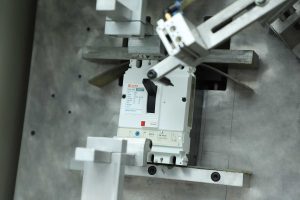
Disclosure: This article contains AI-assisted content reviewed and verified by our technical team to ensure accuracy and relevance.
1. Why Routine Testing Is Critical for MCCBs
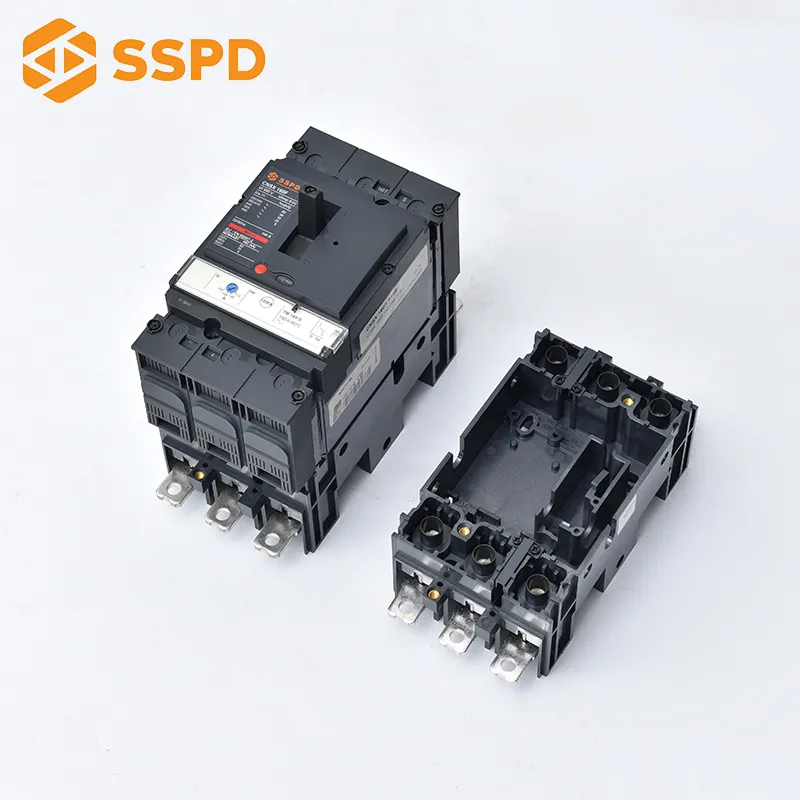
Molded Case Circuit Breakers (MCCBs) play a crucial role in low-voltage power distribution. According to IEC 60947-2, every MCCB must undergo specific routine tests before being deemed safe for use. Unlike type testing (which is done only during product development), routine testing is applied to 100% of units, making it a cornerstone of operational safety and product quality.
Have you ever received an MCCB that failed during installation? If yes, chances are it skipped a robust routine testing protocol.
2. Key Routine Testing Methods
2.1 Dielectric Withstand Test
Simulates high-voltage surge to ensure no breakdown between conductors and ground. This test helps verify the insulation system.
2.2 Contact Resistance Test
Checks the resistance between main contacts; high resistance can lead to overheating. Reliable manufacturers keep it below 1 mΩ.
2.3 Tripping Function Test
Tests the breaker’s response to both overload and short-circuit conditions. Parameters are based on defined curves in the IEC standard.
2.4 Insulation Resistance Test
Using 500–1000V DC, this test confirms insulation quality. Results above 100 MΩ are typical for premium MCCBs.
2.5 Mechanical Operation Test
Repeated ON/OFF cycles simulate real-life usage. Any jamming or failure at this stage may signal issues in spring or linkage design.
2.6 Visual and Dimensional Inspection
Verifies labeling, terminal torque, housing integrity, and accessory assembly.
3. Routine Tests vs. Type Tests: What’s the Difference?
| Routine Test | Type Test | |
|---|---|---|
| Purpose | Verify manufacturing quality | Validate product design |
| Scope | 100% of units | Few sample units |
| Includes | Dielectric, tripping, insulation | Short-circuit withstand, temperature |
| Frequency | Every production batch | Once per design or model |
4. Backed by Standards and Practice
All the routine tests mentioned above are aligned with global standards such as:
-
IEC 60947-2 – International standard for low-voltage switchgear and controlgear
-
GB 14048.2 – China’s equivalent standard
-
UL 489 – North American testing and certification system
At SSPD (Shendian Electric), every MCCB is tested on automated platforms. We retain digital test logs for each unit and support third-party inspections (e.g., SGS, TUV) for global buyers.
5. Real-World Implications
Neglecting proper routine testing can result in:
-
Circuit failure during startup
-
Dangerous overheating or arcing
-
Unnecessary downtime
-
Compliance risks in certified projects
Want to see an actual MCCB test report from SSPD? Contact us and we’ll send you a real sample test record.
6. Conclusion and Call to Action
Routine testing is not optional — it’s the foundation of circuit breaker reliability. Understanding the methods behind MCCB validation helps you make better supplier and product decisions.
✅ Looking for traceable, IEC-compliant MCCBs with professional test records?
SSPD offers complete transparency, factory audit support, and custom labeling services for your market.
📩 Contact our engineering team today for datasheets, test protocols, or consultation on your project specs.