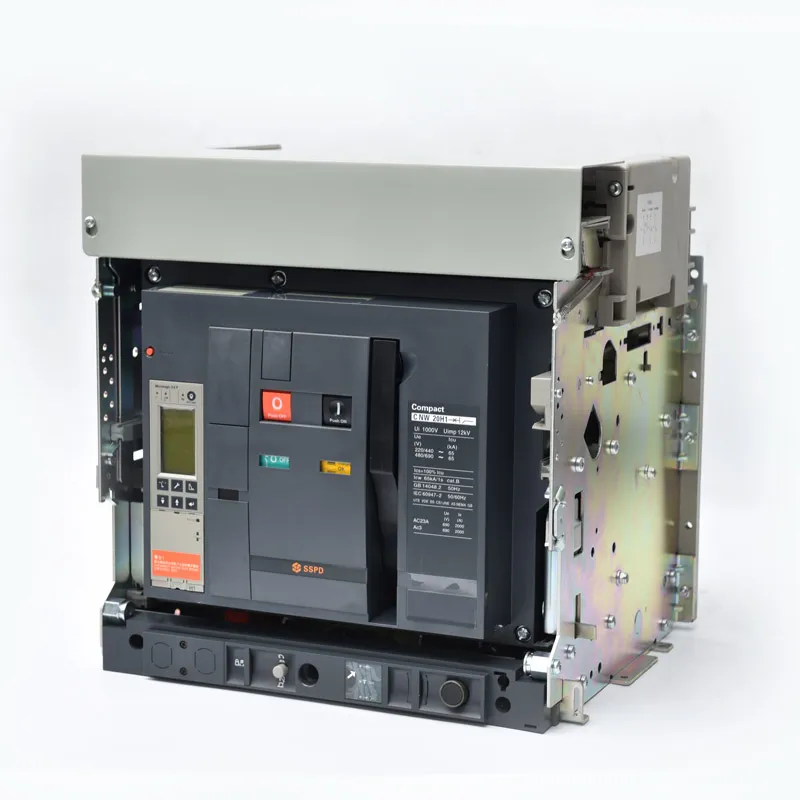
What Is MCCB in Electrical Engineering? — A Practical Guide by SSPD
In modern electrical systems, safety, reliability, and precise protection are essential. One of the most important devices used to achieve this is the MCCB (Molded Case Circuit Breaker). But what exactly is an MCCB in electrical terms? How does it work, and why is it so widely used in industrial and commercial applications?
This guide from SSPD – Shendian Electrical, a professional manufacturer of low-voltage protection devices, explains everything in a clear Q&A format.
Q1: What is an MCCB in electrical engineering?
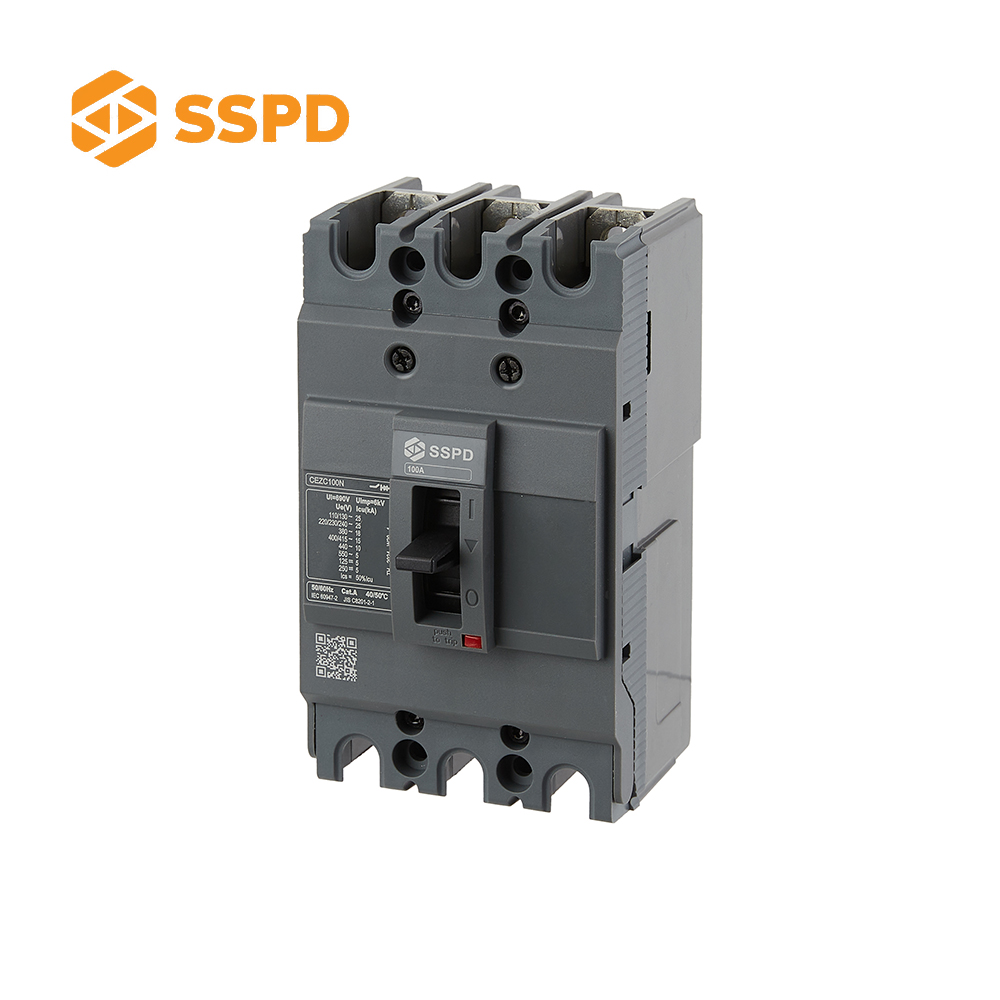
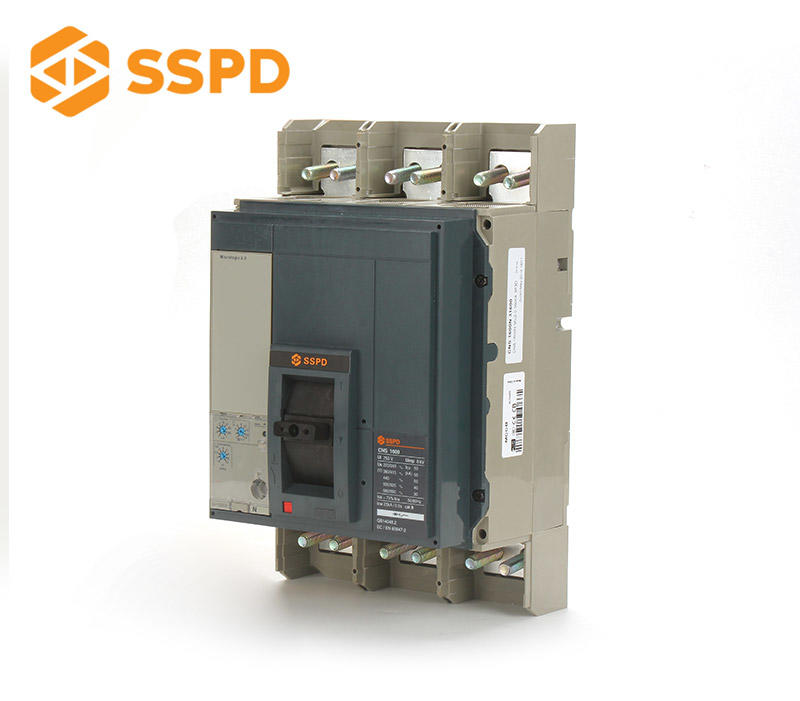
An MCCB (Molded Case Circuit Breaker) is a type of low-voltage circuit breaker designed to protect electrical circuits from overload, short circuit, and in some cases ground fault.
It is called “molded case” because all internal components are enclosed in a strong, insulated molded housing, providing excellent mechanical strength and electrical safety.
Compared with small MCBs (Miniature Circuit Breakers), MCCBs are used for higher current ratings, typically from 16A up to 1600A or even higher, making them ideal for industrial and commercial power distribution systems.
Q2: What is the main function of an MCCB?
The primary functions of an MCCB are:
-
Overload protection – trips when current exceeds the rated value for a certain time
-
Short-circuit protection – trips instantly under fault current
-
Circuit isolation – safely disconnects power for maintenance
-
System protection – prevents damage to cables, equipment, and personnel
SSPD MCCBs are engineered to deliver stable tripping accuracy, high breaking capacity, and long mechanical life, ensuring reliable protection in demanding environments such as factories, buildings, and power distribution panels.
Q3: How does an MCCB work?
An MCCB usually combines two protection mechanisms:
-
Thermal protection (bimetal strip)
When current overload occurs, heat causes the bimetal to bend and activate the trip mechanism. -
Magnetic protection (electromagnetic coil)
During a short circuit, the sudden high current generates a strong magnetic field that instantly trips the breaker.
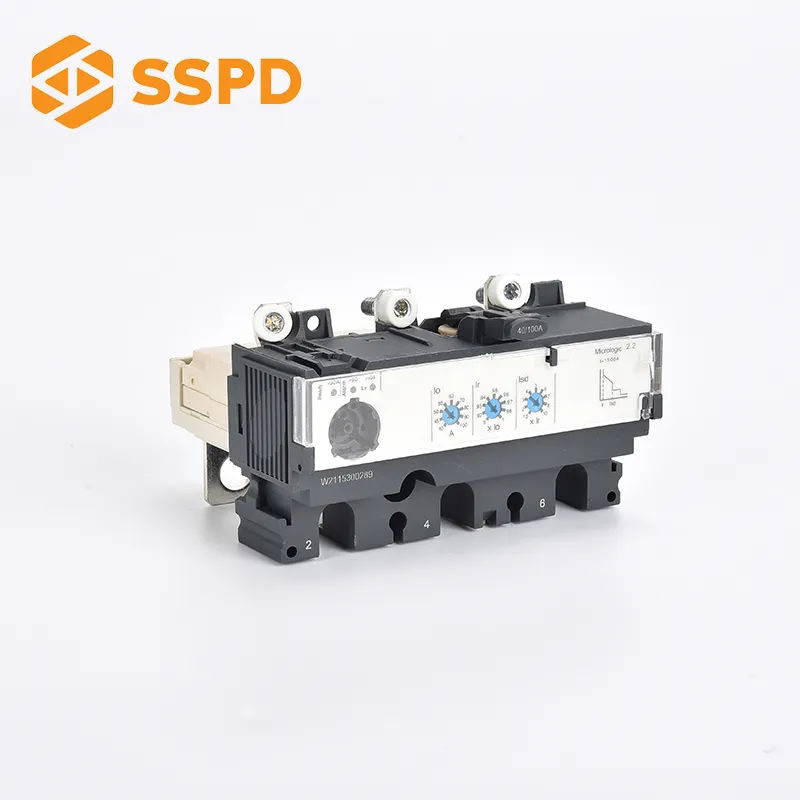
In advanced models, electronic trip units can provide adjustable and more precise protection settings.
Q4: What is the difference between MCCB and MCB?
| Item | MCB | MCCB |
|---|---|---|
| Rated current | Up to ~125A | Up to 1600A or more |
| Breaking capacity | Lower | Much higher |
| Adjustability | Fixed | Adjustable (thermal & magnetic) |
| Application | Residential, light commercial | Industrial, heavy commercial |
| Accessories | Limited | Wide range (shunt trip, aux contacts, motor operator, etc.) |
In simple terms, MCBs are for small loads, while MCCBs are for high-power systems.
Q5: Where are MCCBs commonly used?
MCCBs are widely used in:
-
Industrial motor control centers (MCC panels)
-
Commercial building distribution boards
-
Power distribution cabinets
-
Renewable energy systems (solar, energy storage)
-
Generator and UPS protection systems
SSPD MCCBs are currently exported to the Middle East, Southeast Asia, Africa, Europe, and South America, supporting a wide range of power distribution projects worldwide.
Q6: What key parameters should be checked when selecting an MCCB?
When selecting an MCCB, engineers typically focus on:
-
Rated current (In)
-
Rated voltage (Ue)
-
Breaking capacity (Icu/Ics)
-
Number of poles (1P/2P/3P/4P)
-
Trip unit type (TMD or electronic)
-
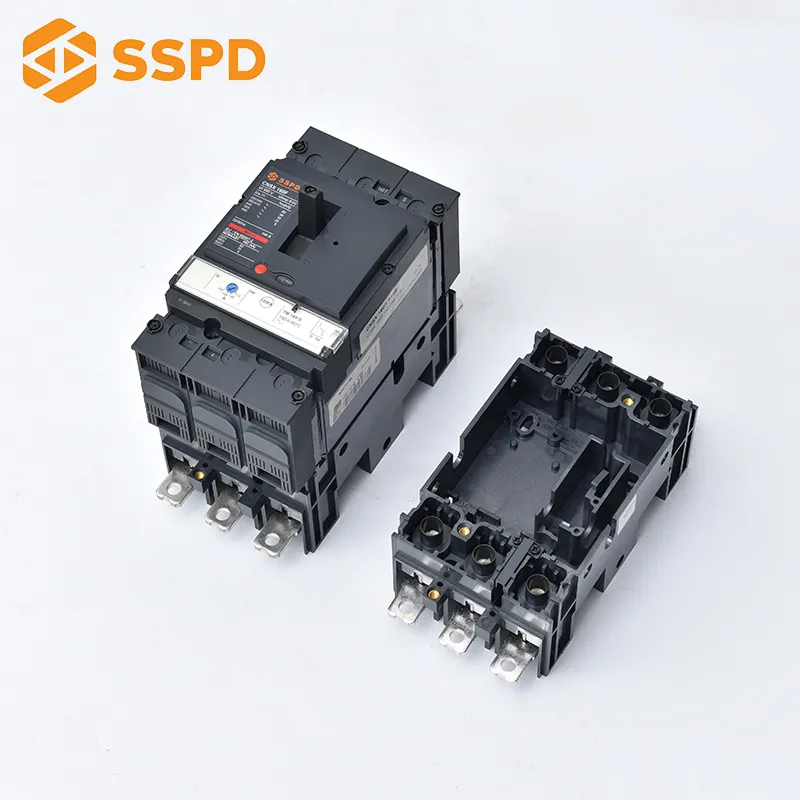
Installation type (fixed, plug-in, withdrawable)
At SSPD, our technical team helps customers match the correct MCCB model according to load type, system voltage, and fault level, ensuring both safety and cost efficiency.
Q7: What accessories can be used with MCCBs?
Modern MCCBs can be equipped with various accessories for smarter control and monitoring, such as:
-
Shunt trip (MX)
-
Undervoltage release (MN)
-
Auxiliary contacts (OF, SD)
-
Motor operator (MCH)
-
Rotary handle
-
Plug-in or withdrawable base
SSPD provides a complete accessory solution compatible with Schneider-type MCCB structures, helping customers build flexible and intelligent power systems.

Q8: Why Choose SSPD MCCBs?
As a professional manufacturer of low-voltage electrical equipment, SSPD (Shendian Electrical) offers:
-
Stable and reliable product quality
-
Full certification support (ISO, CE, etc.)
-
OEM & ODM customization
-
Fast delivery from standardized production lines
-
Proven performance in high-temperature and harsh working environments
Our MCCBs are designed to meet international standards while maintaining excellent cost-performance for global distributors and project contractors.
Final Summary
In electrical engineering, an MCCB is a core protection device for medium and high-current systems. It ensures the safety of power circuits by protecting against overloads, short circuits, and electrical faults.
Choosing the right MCCB—and a reliable manufacturer like SSPD—is essential for building a safe, efficient, and long-lasting power distribution system.