
Working Principle of AC Contactors and Their Industrial Applications
In modern electrical systems, AC contactors play a pivotal role in managing and controlling power circuits, especially in industrial and commercial settings. Their ability to switch high-current loads remotely and safely makes them essential for automation, energy management, and protection. Understanding the working principle of AC contactors and their practical applications is critical for engineers, technicians, and businesses aiming for reliability and efficiency in electrical system design.
What Is an AC Contactor?
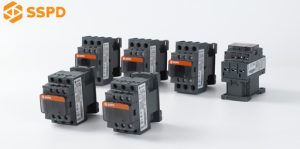
An AC contactor is an electrically controlled switch used to make or break a power circuit. It is similar in function to a relay but is designed to handle higher voltage and current loads. The primary components include:
- Electromagnet coil: Energized to create a magnetic field that closes the contactor.
- Contacts (main and auxiliary): Responsible for carrying the electrical load.
- Arc chamber: Designed to suppress and extinguish electrical arcs during switching.
- Enclosure or housing: Provides insulation and protection.
AC contactors are primarily used in systems operating on alternating current (AC), making them ideal for switching motors, lighting circuits, capacitor banks, and HVAC equipment.
What Is the Working Principle of an AC Contactor?
An AC contactor works by using an electric coil to create a magnetic field. This pulls a metal core that closes the main contacts and lets current flow to the load. When the coil is turned off, the contacts open, stopping the power. This makes contactors ideal for controlling motors and industrial equipment remotely and safely.
This mechanism allows AC contactors to remotely control heavy electrical loads with minimal manual effort, offering both operational convenience and safety.
Why Use an AC Contactor Instead of a Relay?
While relays are suitable for low-voltage, low-current applications, AC contactors are built for more demanding environments. They are:
- Rated for higher voltage and current
- Equipped with arc suppression mechanisms
- Built for repetitive duty cycles
- Often include overload or auxiliary contact blocks
These characteristics make them ideal for industrial motor control, power distribution, and automation systems.
Top 5 Industrial Uses of AC Contactors (With Examples)
1. Motor Control in Manufacturing Plants

AC contactors are used in motor starters alongside overload relays. Common applications include conveyor belts, CNC machines, robotic arms, and injection molding systems.
2. HVAC Systems in Commercial Buildings

In heating, ventilation, and air conditioning systems, AC contactors control compressors, blowers, and pumps. This ensures stable indoor climate regulation while supporting energy-efficient operations.
3. Power Factor Correction Units

AC contactors switch capacitor banks in and out of power systems to maintain a power factor close to unity. This optimizes energy use and prevents penalties from utility companies.
4. Lighting Control in Infrastructure Projects

In large buildings, airports, and stadiums, contactors control lighting circuits centrally and on schedule, increasing efficiency and reducing maintenance costs.
5. Elevator and Escalator Systems

AC contactors ensure smooth operation and emergency shutdown functions in vertical transportation systems by managing motor start/stop sequences and interlocks.
How to Choose the Right AC Contactor
When selecting an AC contactor, consider:
- Load type and current: Resistive or inductive, and the operational current range.
- Utilization category: Such as AC-1 for non-inductive loads or AC-3 for motors.
- Coil voltage: Match your control circuit (e.g., 24V, 110V, 220V).
- Environmental conditions: Dust, humidity, and temperature rating.
- Conformance standards: IEC 60947, UL, CE, and others.
These ensure reliable operation and compatibility with your system.
Maintenance and Troubleshooting Tips
To extend the life of AC contactors:
- Check contact wear regularly.
- Tighten coil and terminal connections.
- Clean dust and debris from the housing.
- Listen for unusual noises during operation.
In critical applications, thermal imaging and sensor-based monitoring can be used for predictive maintenance.
AC Contactor vs. Magnetic Starter: What’s the Difference?
An AC contactor is a switching device, while a magnetic starter combines a contactor with overload protection. Starters are often used for motor applications requiring both control and safety in one device.
Future Trends and Smart Integration
With Industry 4.0, modern AC contactors are evolving to include:
- Modbus or Bluetooth communication
- Built-in diagnostics
- Integration with PLCs and BMS systems
This allows remote monitoring, fault prediction, and energy optimization in smart factories and buildings.
FAQs
What is the difference between an AC and DC contactor?
AC contactors use coils designed for alternating current, and have arc suppression tailored for AC. DC contactors handle constant voltage and require larger arc chutes.
How long do AC contactors last?
A good-quality contactor can perform 1 to 5 million operations depending on its load type and maintenance frequency.
Contact Us
Looking for reliable AC contactors for your industrial project?
👉 To get our catalog or Contact our engineers for tailored solutions from SSPD — your trusted OEM manufacturer of motor control components.